
Robonomics Production Stage & Production Tokenomics Launch
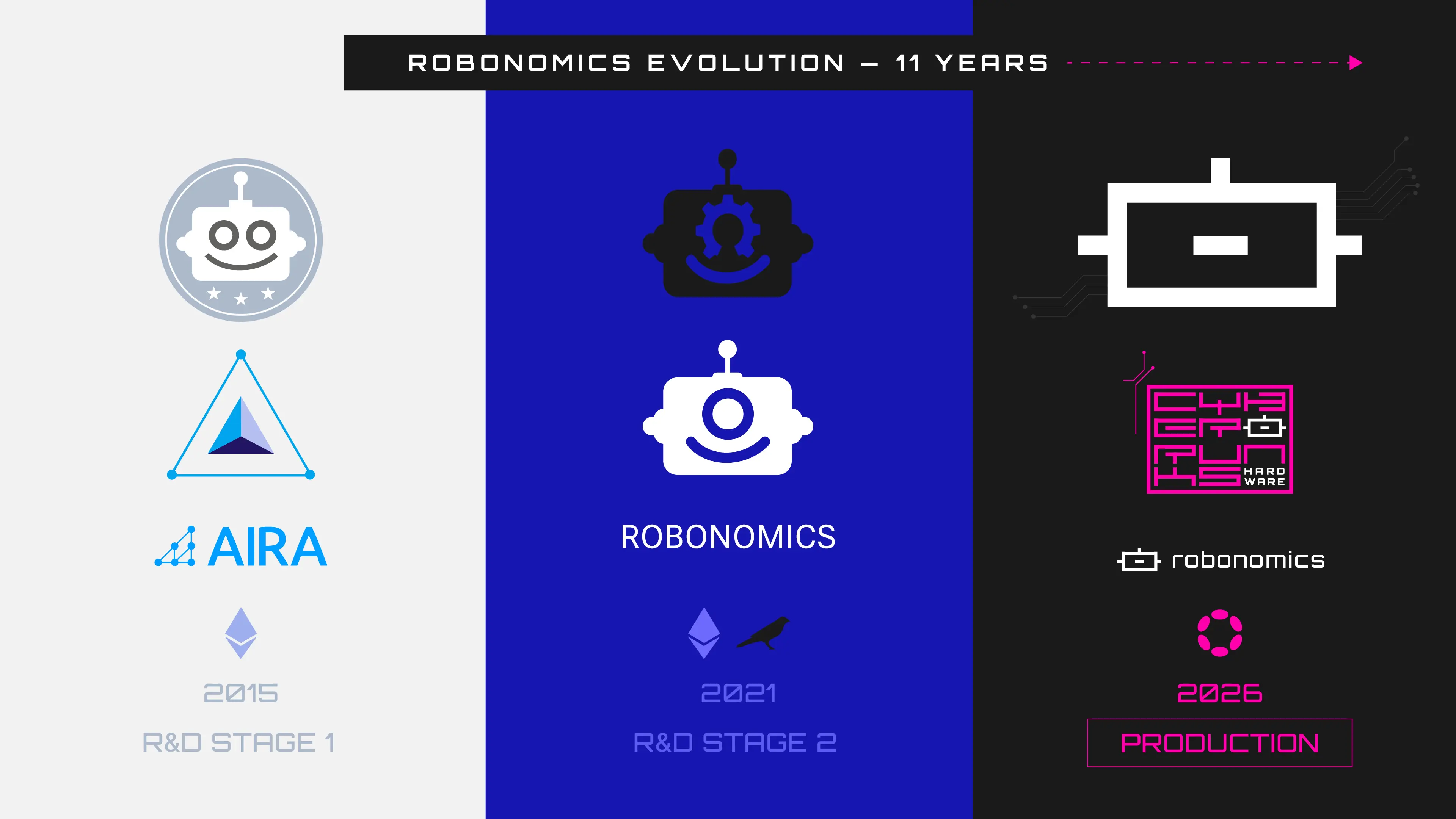
After 11 years of research and development, Robonomics is entering its production stage on Polkadot. This is the first web3 project to ship a certified physical consumer device where the focus is real network usage, not tokens. Below — how legacy XRT migrates, what gets burned, and why this matters beyond the crypto bubble.
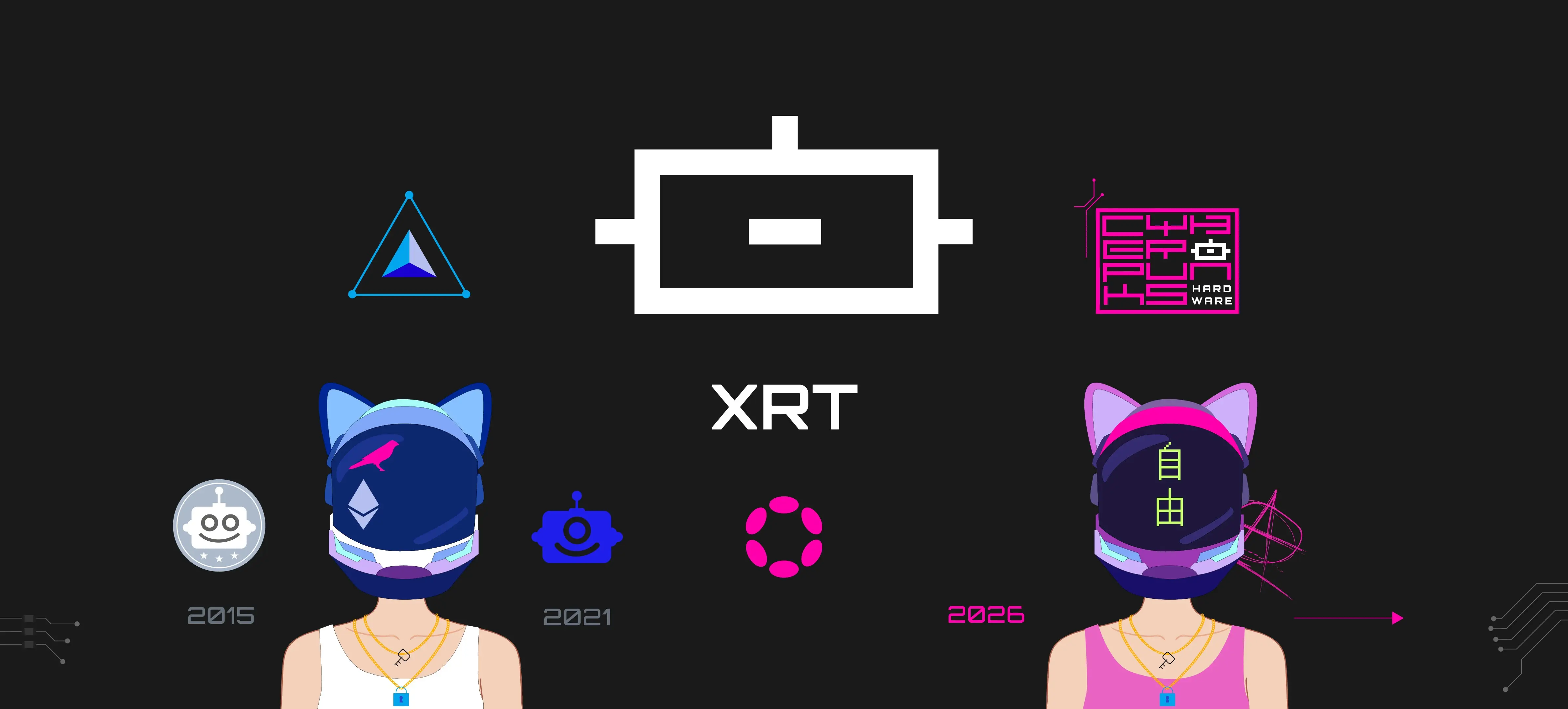
R&D Stage → Production Stage
After 11 years of R&D, Robonomics is moving to production stage. What makes this milestone unique: we are the first web3 project ever to reach production stage with a physical consumer device — one where the focus isn’t on tokens, but on real network usage powering actual device features for end users.
Two Use Cases Survived — and Are Growing
Since 2018, when we built our first prototype after the initial 3 years of R&D combining robotics with web3, we’ve explored several directions. Our original grand vision — creating an Economy of Robots network — is still in R&D, though we are closer to it than ever. But it’s still too early to ship a production-ready use case with 100+ daily operators or customers.
However, two directions we’ve bet on since 2019 — open-source hardware sales and smart home integrations — have shown strong practical traction with real customers. So we’ve decided to focus the core dev team’s attention on them.
Hardware for Cyberpunks
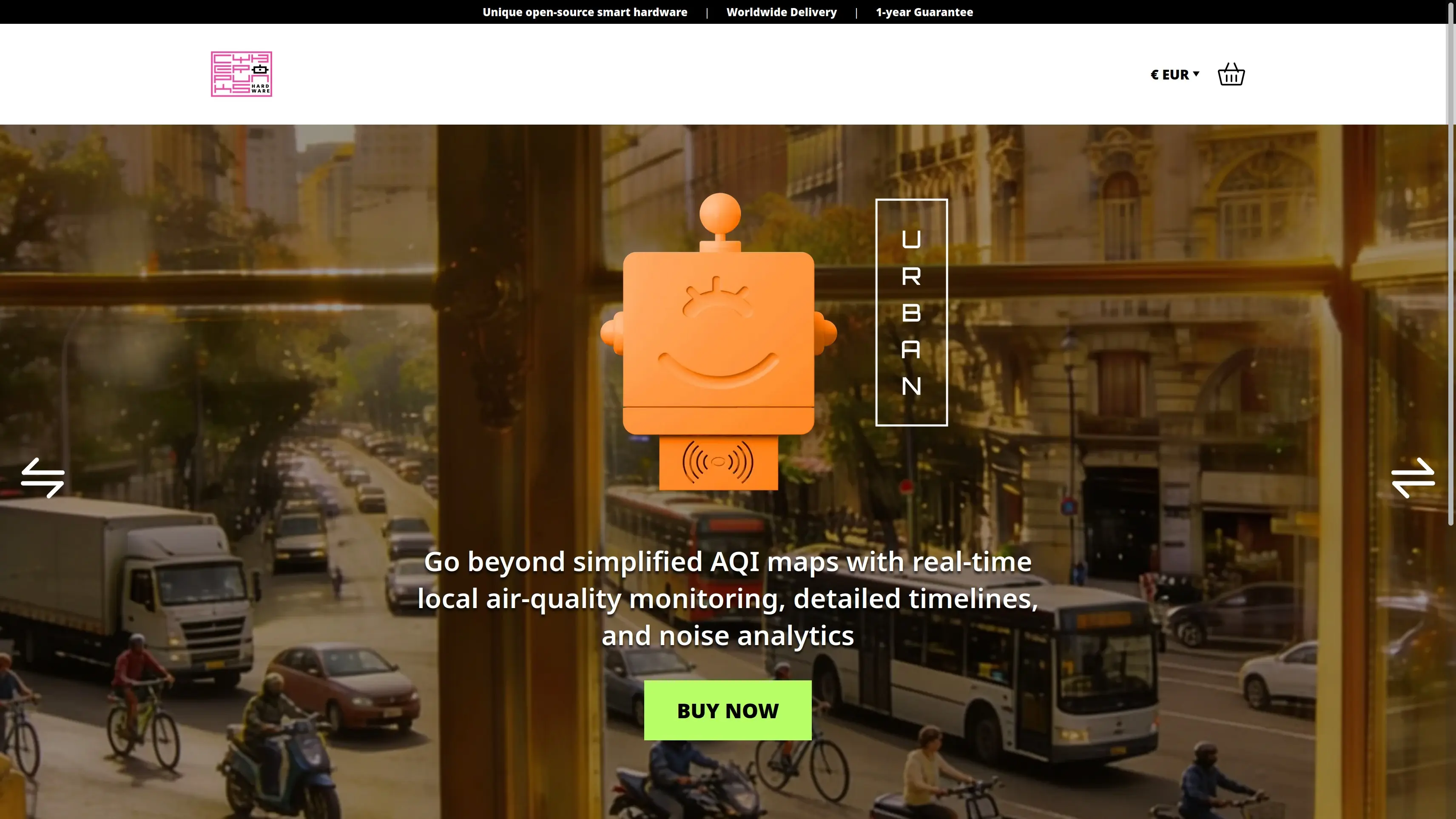
The first web3 hardware in the world — Altruist — is now available at our shop cyberpunks.shop.
Today, 100+ sensors contribute to an open environmental dataset running on web3 infrastructure. You can see all the data on the map at sensors.social. We invite you to join the Altruism movement: get a sensor, install it on your balcony, and start contributing. Or grab the Altruist Dual to capture both indoor and outdoor data.
Hardware sales require Robonomics to operate at production stage — and that’s a major event for the whole community. Because ordinary people will order and use our sensors in their daily routines, the project can no longer remain at R&D stage. So we’re moving to production with our first well-tested, fully certified end-customer device. That’s another big step toward building an open-source smart-device brand for cyberpunks.
Amazon EU is next. After two months of preparation following our European retail certifications, our Amazon seller account has just been verified — so in the coming weeks Altruist will be available on Amazon across Europe alongside cyberpunks.shop.
Smart Home Solutions
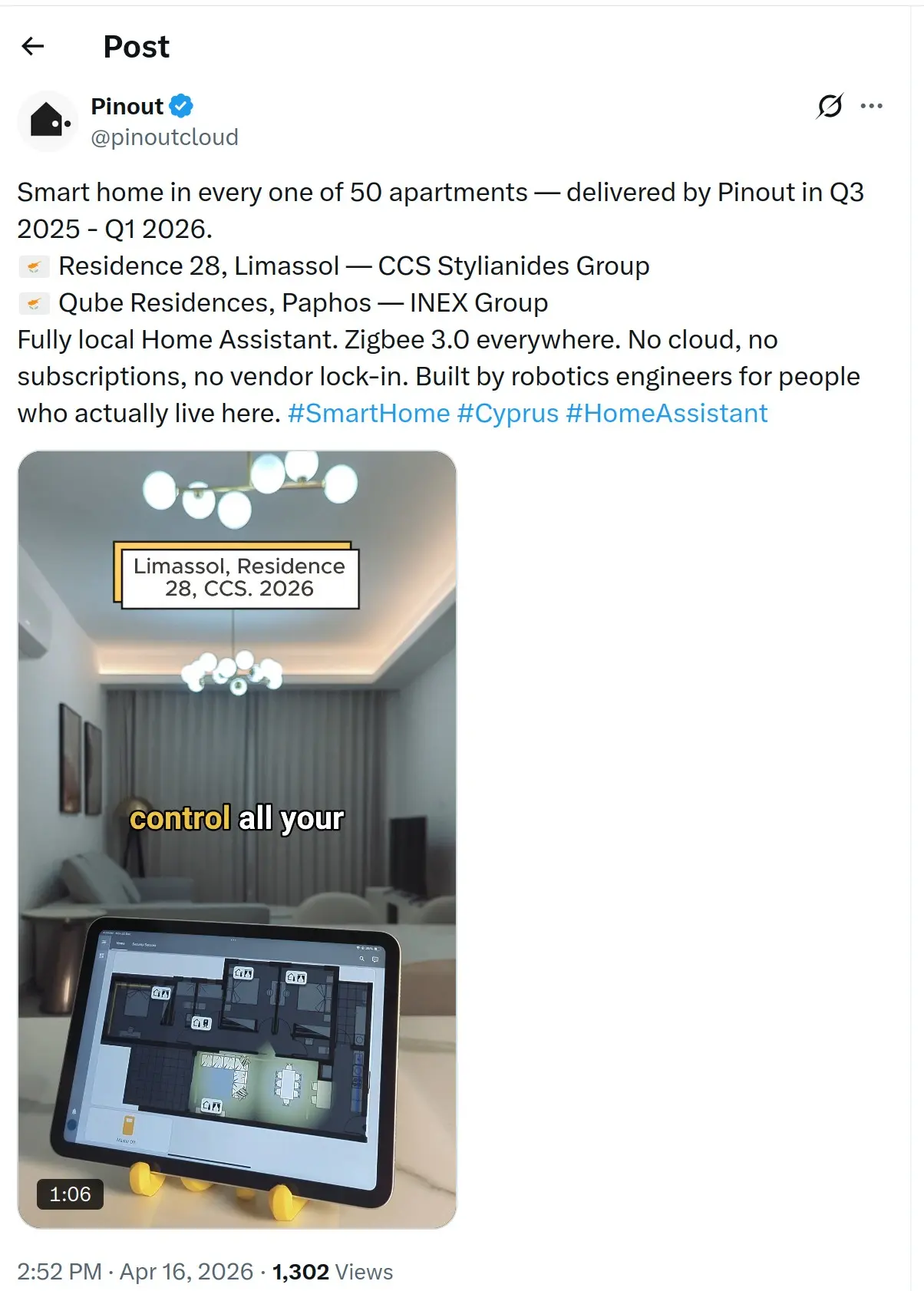
In Cyprus, a branch of the core dev team works on smart home use cases for the Robonomics platform. Over the past 2 years, they’ve completed deployments in 4 residential buildings, now serving 100+ apartments and families who rely on our services and support on a regular basis.
In early 2026, the first residential complexes went live with these systems installed end to end — and they double as the first real-world testbed for the privacy-preserving remote-monitoring stack we’ve built on Robonomics. See the Pinout team’s post on X for the rollout.
In the last 2 months, our smart home engineers have built a solution that remotely connects apartments to an AI support agent via Robonomics on Polkadot. Features like automatically triggered error reports for customer support also require Robonomics to be at production stage — just like our first smart device.
Open Source, in Spirit
Robonomics stays open source — and not just by license. The project belongs to no single company; it is no one’s private IP. Everything the team has built is shared with all of humanity, free for anyone to study, run, and build upon.
The creators will keep using what we’ve built in our own products — selling open-source hardware, running smart-home deployments, and, in time, growing a Robocorporation on top of Robonomics — and we’ll keep helping the network itself mature. What we refuse to do is turn it into a closed corporate tool — the network is a public good, and it stays that way.
If the Network Isn’t About Tokens, Why XRT?
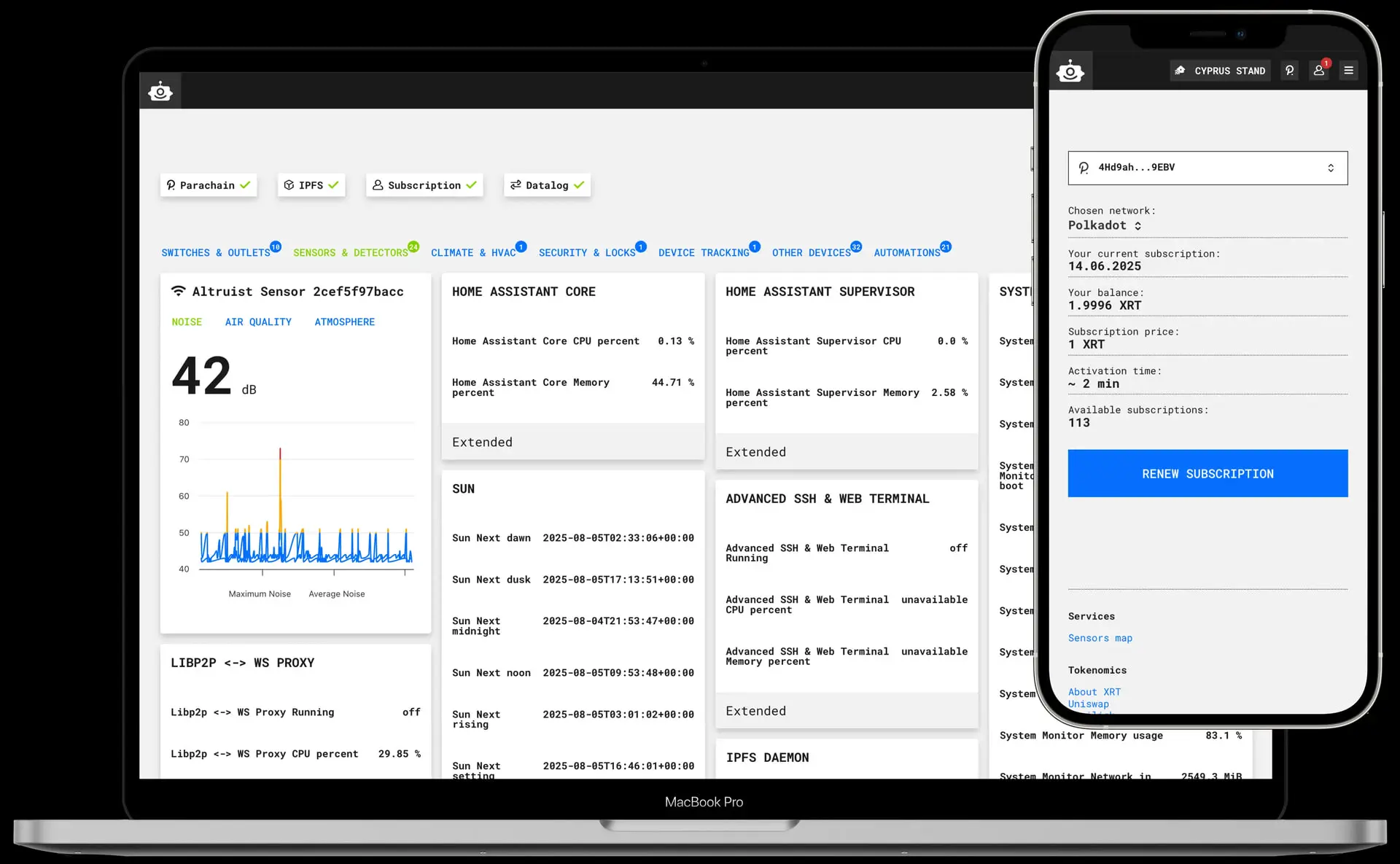
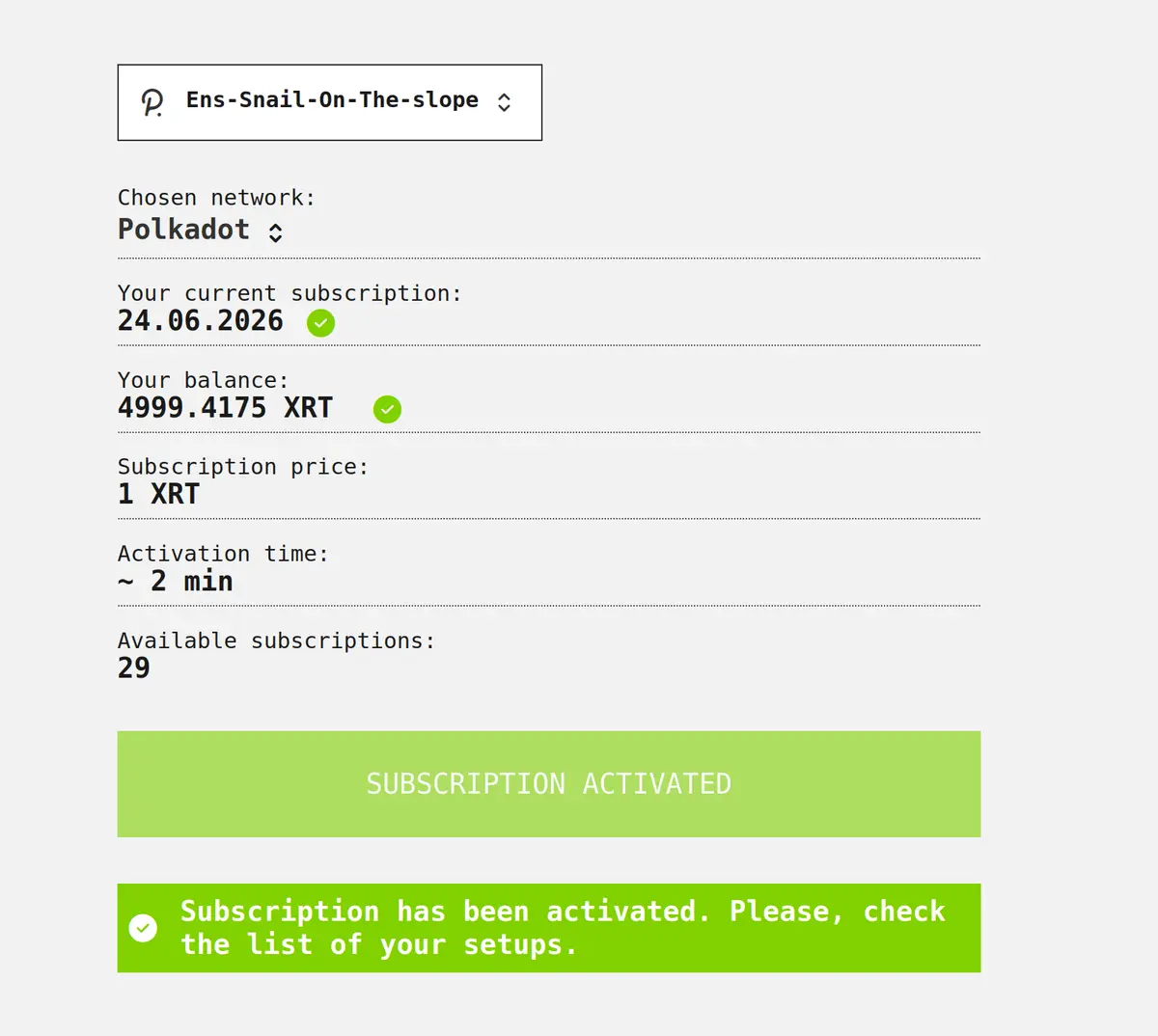
If real usage is the point, what is the token even for? XRT is what users pay with for cloud services — the same class of cloud that the data centers of Microsoft, IBM, and AWS provide, only delivered on the Robonomics platform and implemented on Polkadot.
Production XRT lives only on Polkadot — that is the token the network and every cloud subscription actually run on. What trades as XRT on Ethereum is the bridged Polkadot production XRT itself: minted 1:1 against the Polkadot token via Snowbridge and present on Ethereum exclusively to seed and sustain liquidity on Uniswap, the world’s main DEX.
Like any corporate cloud, Robonomics lets a device store its digital twin, keep its user and access lists, and run standard cloud functions — launching a device remotely, collecting telemetry, and storing that data in the cloud. To do any of this, a device needs a cloud subscription — and that subscription is paid in XRT.
Our cloud is built to be cheaper than the corporate incumbents, and a better fit at global scale.
Fair Subscription Pricing Needs Independent Traders
Because a subscription is paid in XRT, the price of XRT is the price of the cloud. That price should not be dictated by the core team — it has to be discovered on an open market.
This is what makes independent XRT traders essential. By buying and selling freely, they keep the token’s price honest — and with it, the real cost of a Robonomics cloud subscription for every device owner. No traders, no fair price.
So the main job of an XRT holder is not simply to hold — it is to trade. Acting as an independent merchant of XRT, putting real orders on the market, is exactly how a holder serves the network.
To make that possible from day one, the developers have seeded the first liquidity themselves. You can back the launch as one of the very first traders of the production token — buy into that dev-seeded liquidity while it sits in its opening $0.5–$2 price corridor — a deliberate launch-entry range, set below the ~$2.20 reference used for the valuation figures later in this post. The production-stage XRT smart contract on Ethereum: 0x1F752250f518e419f2F03804E25728c5C6DfF73f.
XRT Migration from R&D Stage to Production Chain on Polkadot
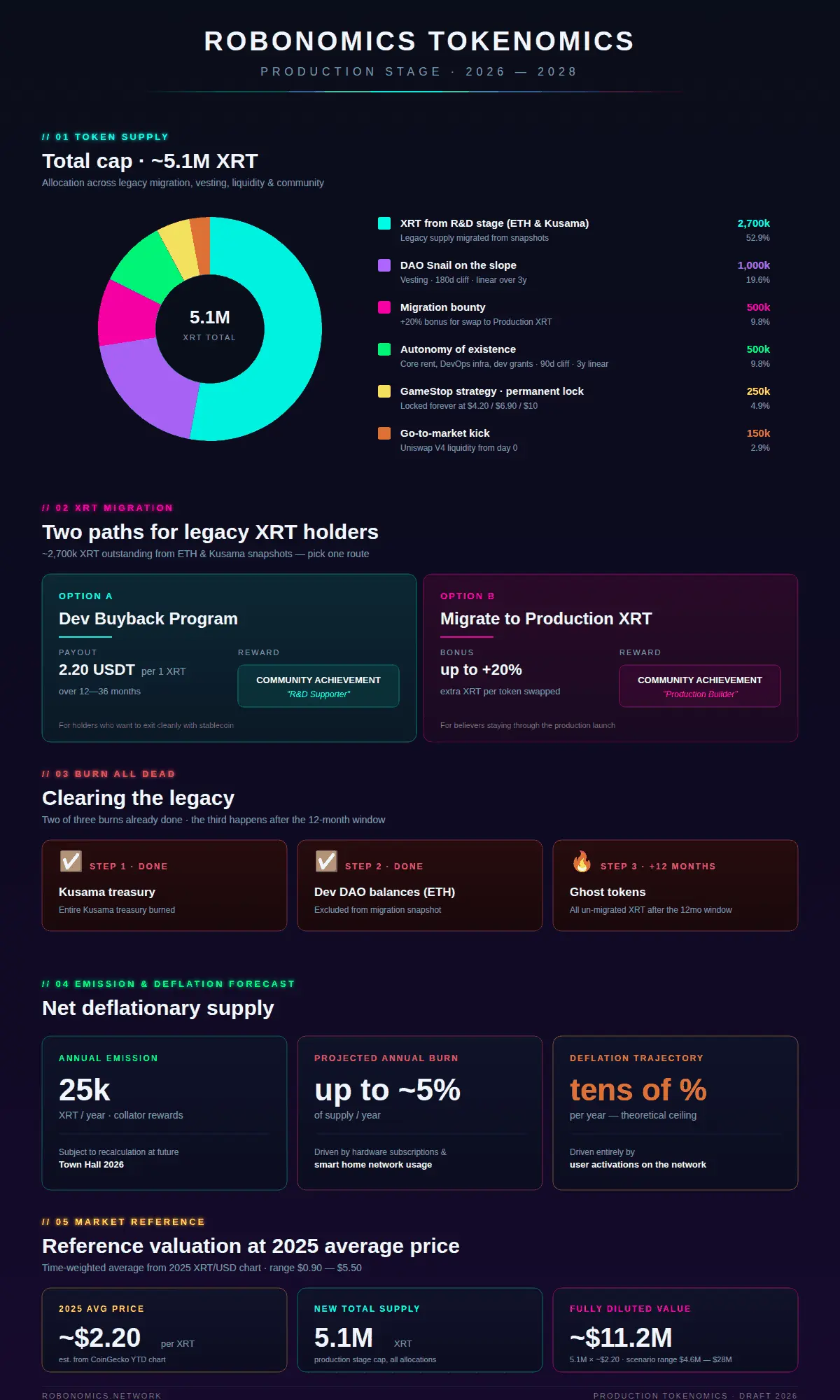
Current total supply derived from two snapshots (ETH & Kusama): ~2,700k XRT
Two Options
Option 1 — Dev Buyback Program. Receive 2.20 USDT for each 1 XRT over the next 12–36 months, plus an NFT achievement: “Robonomics R&D Supporter”.
Option 2 — Migrate to Production Stage XRT. Receive a “Robonomics Production Builder” NFT and a bonus of up to +20% extra XRT for each token swapped.
Timing — when each side can act.
- Ethereum holders. A balance snapshot of the legacy XRT contract will be published next week; both options open from that snapshot.
- Kusama holders. Both options open immediately after the Kusama parachain is wound down (within ~1 month from now).
In both cases, production-stage XRT (Option 2) must be activated within 12 months of being credited — anything left un-activated gets burned as a “ghost token” (see Burn All Dead below).
Burn All Dead
Two of the three burns are already done. Before opening the migration, the dev team cleared what it controls:
- Kusama treasury — burned. The Robonomics Kusama treasury has been destroyed in full.
- Dev DAO balances — excluded. The Ethereum balance snapshot for the production migration was taken with the dev DAO addresses already removed; none of those balances migrate.
So only holder tokens cross from R&D to production — the core team is not bringing its own legacy stash across.
The third burn happens later:
- Ghost tokens. Any production-stage XRT that holders never activate within the 12-month migration window gets burned.
What if you miss the 12-month window?
Not necessarily lost — but the path is on-chain governance, not silence. If a holder misses the activation window, the case can be brought to Robonomics production governance with on-chain proof of ownership of the original R&D-stage XRT. The community of production-stage XRT holders can then vote to restore that balance.
Realistically, this should only apply to a handful of people. The whole point of the 12-month window is to draw a clean line — we are not interested in dragging ten years of legacy dust into the production stage by default. But for genuine individual edge cases, on-chain democracy is the path; that is exactly what it is there for.
Robonomics Token Supply 2026–2028
| Allocation | Amount (XRT) | % of Supply | Unlock / Vesting | Purpose |
|---|---|---|---|---|
| XRT from R&D stage (ETH & Kusama) | 2,700,000 | 52.9% | Released on migration (12-month window) | Bridge legacy supply to the production chain |
| DAO Snail on the slope | 1,000,000 | 19.6% | 180d cliff, linear over 3 years | Project core team DAO |
| Migration bounty | 500,000 | 9.8% | Paid as +20% bonus on swap | Incentive to migrate vs. take the buyback |
| Autonomy of existence | 500,000 | 9.8% | 90d cliff, linear over 3 years | Core rent, DevOps infra, dev grants |
| GameStop liquidity lock | 250,000 | 4.9% | Locked forever at $4.20 / $6.90 / $10 | Permanent floor liquidity for the community |
| Go-to-market kick | 150,000 | 2.9% | Live from day 0 | Uniswap V4 bootstrap liquidity |
| Total cap | 5,100,000 | 100% | — | — |
Annual emission: up to 25,000 XRT/year to collator rewards. Subject to recalculation at future Town Halls.
FDV reference @ ~$2.20 (2025 avg): 5.1M × $2.20 ≈ ~$11.2M
Forecast
The developers want to build a Robocorporation on top of Robonomics as the next step at the intersection of web3 and the hardware business. If we succeed, by my closer estimations the network will see:
- Burn up to ~5% of supply per year in the first years
- The theoretical deflation ceiling runs into the tens of percent per year — driven entirely by user activations on the network
Market Reference
Reference valuation at the 2025 average XRT/USD price (time-weighted estimate from the 2025 chart, range $0.90 — $5.50):
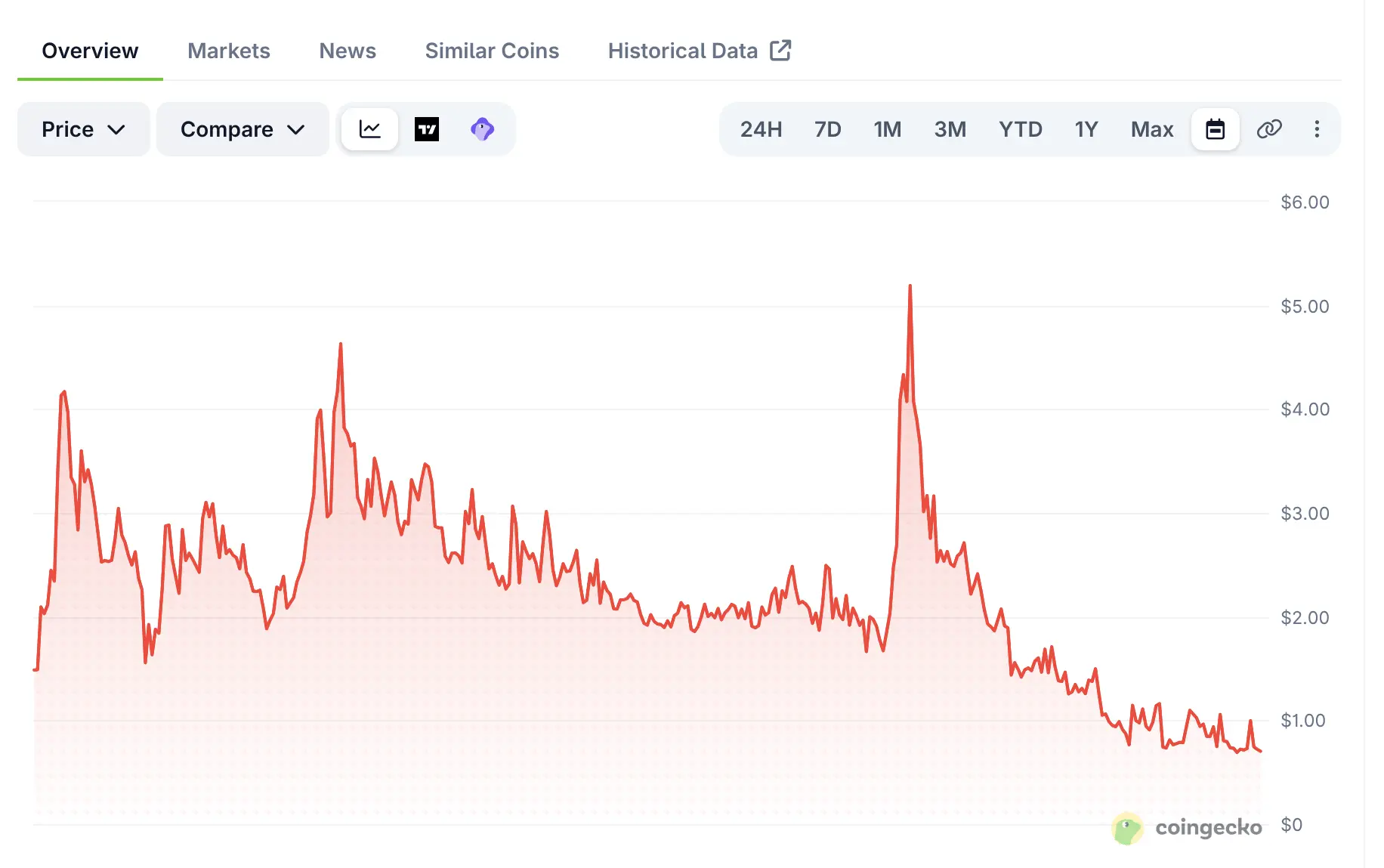
- 2025 average price: ~$2.20 per XRT
- New total supply: 5.1M XRT (production-stage cap, all allocations)
- Fully diluted value: ~$11.2M (5.1M × ~$2.20)
- Scenario range: $4.6M (at year low ~$0.90) — $28M (at year high ~$5.50)
Town Hall 2026
Agenda for Town Hall 2026:
- Set the collator reward
- Set the total monthly subscription amount
- Set the starting / floor price of the subscription
- Set the RWS total bandwidth
Collator reward — proposal on the table
Collators maintain the Robonomics app (parachain) by collecting IoT-device transactions and producing state-transition proofs for Polkadot’s validators. To keep their operators motivated, the per-block collator reward needs periodic recalibration — it has to cover the cost of running a reference node with ~30% margin, support the minimum desired number of active collators, and reflect the current (or minimum desired) XRT price.
For this cycle the DevOps inputs are: OVH dedicated hardware (AMD Epyc 4345P, 64 GB RAM, 2×960 GB NVMe — RAID0 leaves ~800 GB free over the current ~1.1 TB DB) at ~$2,040/year, with 7 minimum collators, XRT at $1, and ≈4.5M parachain blocks/year (avg block time ~7s). Proposed payout: 0.0042 XRT per block.
This is calibrated for the early production stage. As network usage and the XRT price grow, the pool of operators for whom running a Robonomics collator pays off should expand organically. For now, the goal is simply to give a small group of providers a real reason to keep the network alive.
Total subscription cap — between theory and practice
On paper, the throughput ceilings of a Polkadot parachain are already high — many more subscriptions than the network will need for years. In practice, we want to approach those theoretical limits carefully, not jump to them.
At the same time, the total number of available subscriptions directly drives the financial model of the Robonomics cloud on Polkadot — every issued subscription is recurring on-chain revenue, and the cap shapes how that revenue scales. So this parameter is too consequential to lock in quietly.
For the next few years, the actual number of issued subscriptions will be discussed openly, and the cap on active subscriptions will be set through token-holder governance — Town Hall by Town Hall. Once we see a stable practical ceiling emerge in the real network, we may eventually retire this parameter from the list of things put to a vote.
Subscription starting price — the other side of the financial model
The active-subscription cap is only half of the picture; the starting price is the other half. The price has to sit honestly against the market — not so low that we underprice what the Robonomics cloud actually delivers, and not so high that we lose the “cheaper-than-corporate, global-scale” positioning we just committed to.
At the Town Hall I’ll put the proposed minimum-price calculation on the table for the community to look at and decide on.
RWS bandwidth — not retired, just paced
If anyone thinks the RWS token has been quietly shelved — it hasn’t. RWS stays in the picture; it’s just a deliberately limited, niche service inside Robonomics, aimed at a specific group of users who will show up over time rather than on day one.
Rolling RWS forward into the production network depends on first recalculating the total parachain bandwidth Robonomics dedicates to it. Recent Polkadot benchmarks look encouraging — they suggest we can probably allocate noticeably more bandwidth per 100 RWS tokens than before. The exact number is for the Town Hall to settle.
A Note to Exchanges and Trackers
To remove any ambiguity, here is where XRT lives across networks for the production stage:
| Network | Role | Where | Status & notes |
|---|---|---|---|
| Polkadot | Production XRT — primary | Robonomics parachain on Polkadot | Active. The network and every cloud subscription run on this token. |
| Ethereum (new) | Bridged Polkadot XRT — for Uniswap liquidity | 0x1F75…73f on Etherscan | Active. Bridged 1:1 from the Polkadot production XRT via Snowbridge — exclusively to supply liquidity on Uniswap, the world’s main DEX. |
| Ethereum (legacy) | R&D-stage XRT — deprecated | 0x7dE9…1cb7 on Etherscan | Subject to migration. Balance snapshot to be published next week. |
| Kusama | R&D-stage XRT — deprecated | Robonomics Kusama parachain | Subject to migration. Happens immediately after the Kusama parachain wind-down (~1 month). |
The new Ethereum XRT is bridged only with the Polkadot production XRT via Snowbridge — there is no bridge between this new contract and either the legacy Ethereum XRT or the Kusama XRT.
Live chain state. For up-to-date Robonomics activity on Polkadot — blocks, balances, governance proposals, collator status — use the standard Polkadot Apps explorer at polkadot.js.org/apps (point the explorer at the Robonomics parachain endpoint to see Robonomics data).
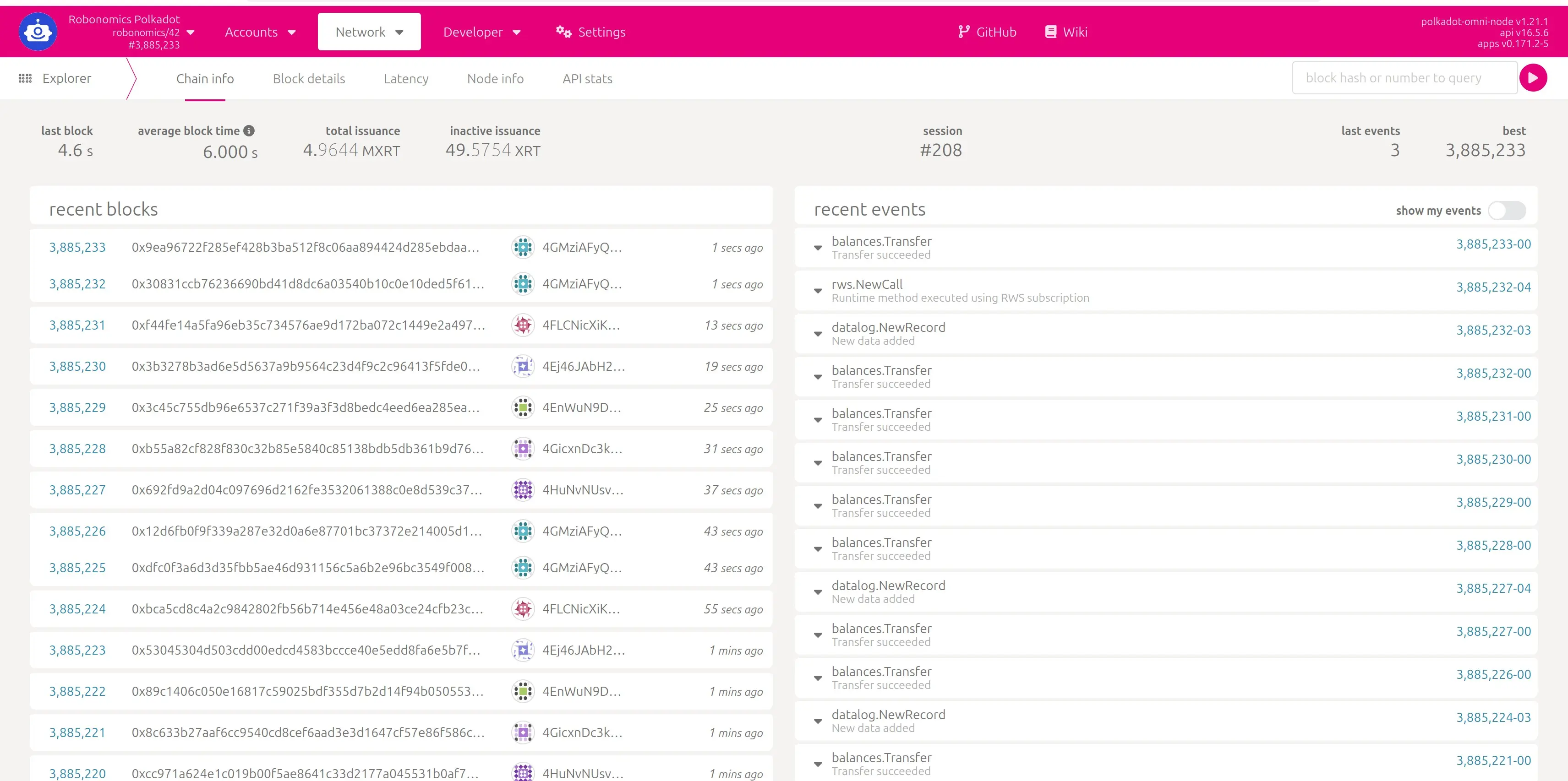
Migration timeline. A snapshot of Ethereum balances for migration to production XRT will be published next week. The Kusama-side migration runs immediately after the Kusama parachain is wound down (within the next month).
CoinGecko & CoinMarketCap. Please update Ethereum listings to track the new bridged Polkadot XRT contract — 0x1F752250f518e419f2F03804E25728c5C6DfF73f — and mark the legacy contract as deprecated.
Kraken. Once the Kusama parachain is wound down (within a month) please prepare to delist XRT. After the wind-down, XRT trades on DEX only — on Uniswap.
Why this matters
What’s unfolding here is, frankly, what anyone who has been around since the dawn of Bitcoin has been quietly waiting for — and I count myself in that group: products built on the technologies Bitcoin opened up, grown at last into a conscious, practical tool for human freedom in the physical world — at the very moment corporations keep stripping away ordinary people’s digital rights to that same freedom.
To me, Robonomics is the only web3 project in the world that has actually reached this point today. And the only reason we are pushing this hard for a real production network is exactly that — to deliver real services to real people, outside the crypto bubble.
— EnsRationis, Founder & Software Architect of Robonomics Platform
Follow @AIRA_Robonomics on X for ongoing news from the Robonomics team.